
Getting Started
How Does FlexConnect Match Me With a Coach?
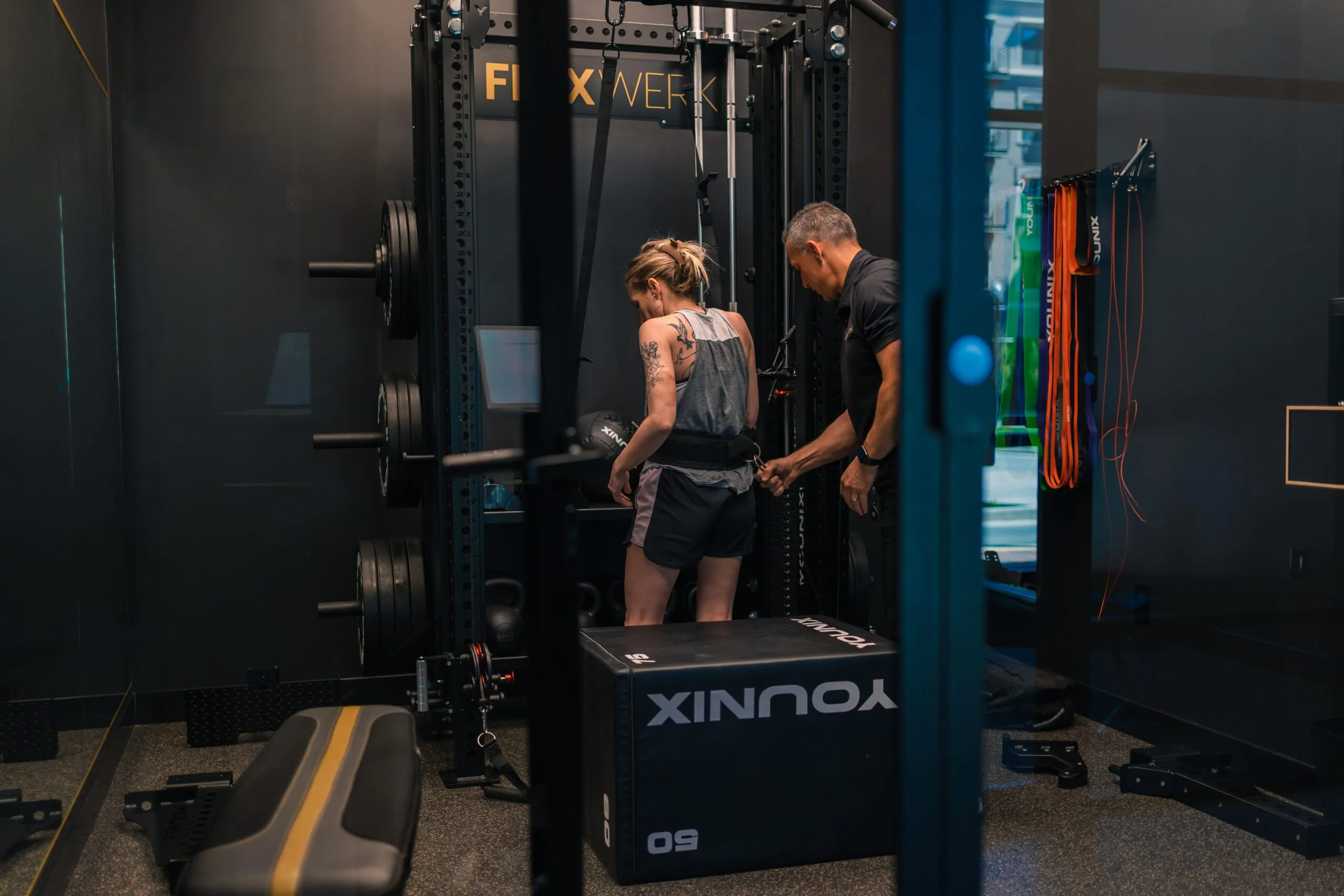
FlexConnect matches you with a coach using four inputs: your goals, your schedule, your personality, and each coach’s specialties. Instead of being handed whichever trainer happens to be free at the desk, you’re paired with someone whose expertise and working style actually fit what you’re trying to accomplish — and if the fit isn’t right, you say so and get rematched.
The four matching factors, in plain terms
Each factor exists because it predicts something different about whether coaching will work for you.
- Goals. Fat loss, strength after 40, getting ready for an event, rebuilding after years off — coaches have genuine specialties, and the coach who’s brilliant with youth athletes may not be the right fit for postpartum training. Matching on the goal puts you with someone who has run your exact play before.
- Schedule. A perfect coach you can never book is a bad match. FlexConnect accounts for when you can actually train, which matters more than most people admit — the sessions that happen are the only ones that count.
- Personality. Some people want a patient teacher who explains the why behind every movement. Others want someone who counts reps and doesn’t accept excuses. Neither is wrong; mismatching them is.
- Specialties. Beyond the headline goal — injury-history awareness, nutrition-habit coaching, strength sport background, working with true beginners — specialty depth is what separates a fine trainer from the right one.
With more than 40 fitness professionals running their businesses at FlexWerk Carmel, there’s a real roster to match from — this isn’t a system that funnels everyone to the same three staff trainers.
Why matching beats “whoever’s available”
At many gyms, trainer assignment is essentially a sales rotation: you sign up, and whoever is next in line gets your file. That’s how a 55-year-old with a back-pain history ends up with a 24-year-old whose entire toolkit is bootcamp circuits.
The coach-client relationship is the product in personal training. When the fit is right, you show up, you tell the truth about your eating and sleep, and you keep going through the boring middle weeks where results are building but not yet visible. When it’s wrong, people don’t usually complain — they quietly stop booking. A deliberate match protects the single biggest driver of results, which is simply continuing.
There’s also an incentive difference worth naming. The professionals at FlexWerk are independent coaches running their own businesses — averaging around 24 sessions a week — not employees working a floor shift. A coach whose livelihood is their client roster has every reason to make a match succeed and no reason to cling to a mismatch: their reputation rides on your results, not on this month’s sign-up quota.
What the process looks like from your side
You start with a free consultation — a conversation, not a workout. You’ll talk through what you want over the next 90 days, what your calendar honestly allows, and what’s worked or fallen apart before. You’ll also get a free InBody body-composition scan, so whoever you’re matched with starts from real numbers rather than guesses. What that meeting covers in detail is laid out in what’s in the free consultation.
From there, FlexConnect pairs you with a coach, your first session is free, and sessions happen one-on-one in a private FlexWerk suite — your own room, not a shared floor. There’s no obligation built into any of it; the consultation and first session exist so you can judge the fit with real experience instead of a sales pitch.
Two practical notes. First, come with real answers rather than polished ones — the matching inputs are only as good as their honesty, and coaches have heard every version of “my schedule is complicated.” Second, don’t over-prepare: you don’t need fitness vocabulary, a training history, or a plan. Arriving with nothing but a goal and a calendar is a completely normal starting point, and turning that into a program is precisely the job.
If the match isn’t right, say so
No matching system bats a thousand, and pretending otherwise would be dishonest. Sometimes the coaching style that sounded right in theory feels wrong in the room. When that happens, tell the team — you’ll be rematched, and it’s genuinely not awkward, because the structure assumes rematching will occasionally happen. What that conversation looks like is covered in what if I don’t like my trainer.
That’s a real advantage over hiring an independent trainer directly: if that relationship sours, your options are an uncomfortable breakup and a search from scratch. Here, the roster and the rematch path already exist. Nothing about your program resets, either — your baseline, history, and goals carry over to the new coach, so a rematch costs you a conversation, not your progress.
How to stack the deck for a great match
The matching is only as good as what you feed it. Three things make the biggest difference:
- State preferences plainly. If you’d be more comfortable with a male or female trainer, say so — it’s a standard input, not an imposition.
- Give your real schedule, not your aspirational one. Matching to the 6 AM slot you’ll actually keep beats matching to the 5 AM slot you won’t.
- Share what failed before. A coach who knows you’ve quit two gyms out of boredom will program differently than one who thinks you’re a blank slate.
You can browse the kinds of coaches who work here at find a coach, but the practical first step is the consultation — twenty-odd minutes of honest conversation is what turns a roster of forty-plus professionals into the one who’s right for you.
Related questions
Do I get to have input on my coach match?
Yes — the match is built from what you share about your goals, schedule, personality, and preferences. The more honest that input, the better the pairing.
What if the coach I'm matched with isn't a good fit?
Say so. The whole point of a matching system is that you're not locked to one trainer — you can be rematched with someone whose style fits better.
Does matching cost anything?
No. It starts with a free consultation that includes a free InBody body-composition scan, and your first session is free too.