
Results & Process
How Sore Is Too Sore After a Session?
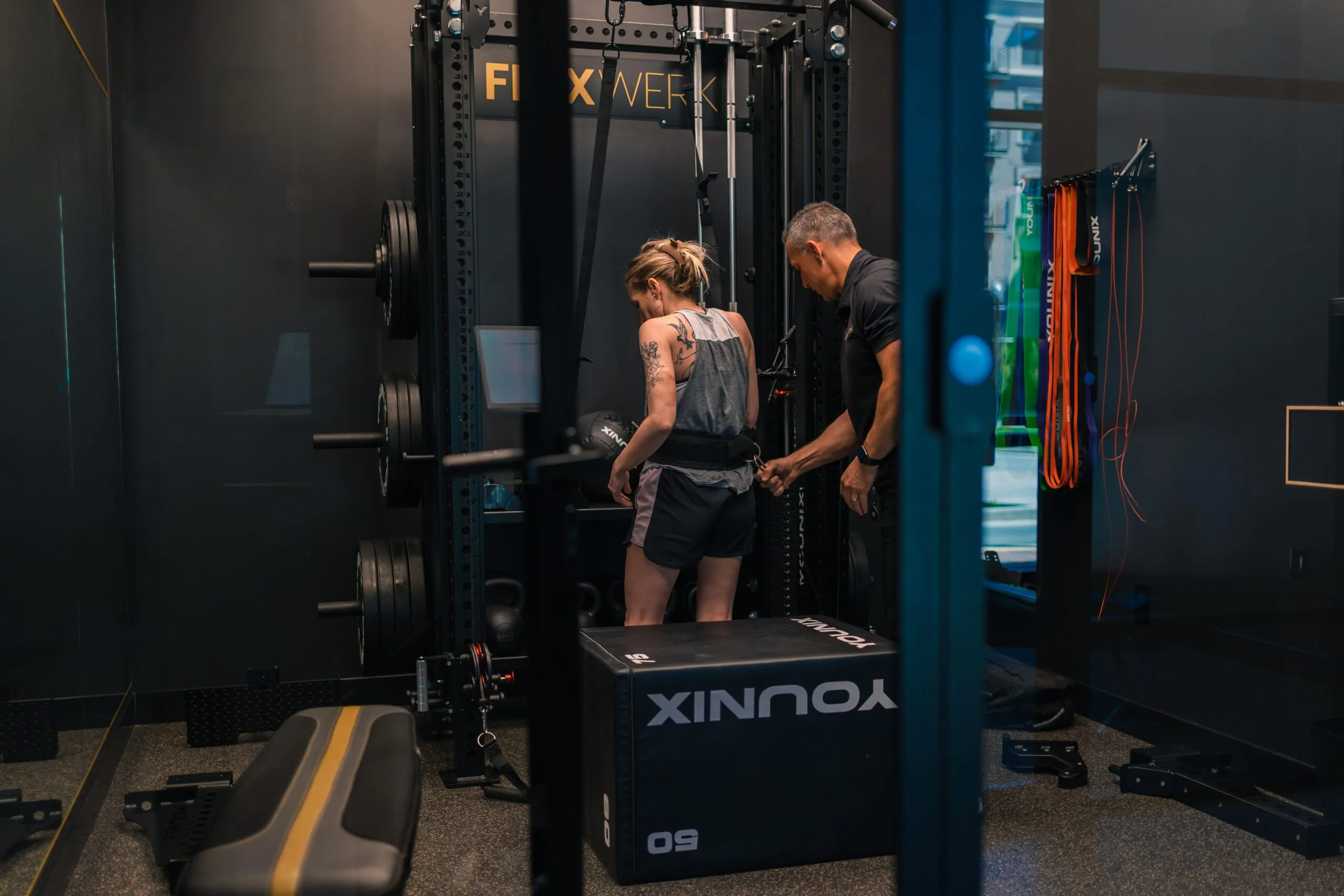
Normal soreness is a dull, symmetrical ache in the muscles you trained — it appears a day or so after the session, peaks around 24 to 72 hours, and eases with gentle movement. Too sore is different in kind, not just degree: sharp pain, one-sided pain, pain in a joint rather than a muscle, swelling, pain that changes how you move — or soreness so severe it wrecks days of your life. The first kind is training. The second kind is information your coach needs, and occasionally your physician.
What normal soreness feels like
The dull post-training ache — delayed-onset muscle soreness, DOMS — is your body’s response to unaccustomed work, and it follows a predictable script: little or nothing the same day, stiffness arriving the next morning, a peak somewhere in the 24-to-72-hour window, then a steady fade. It lives in the bellies of the muscles you trained, roughly symmetrically — both quads, both glutes — and, tellingly, it eases once you warm up and move.
Expect the most of it in week one of a new program, after long layoffs, and whenever training changes direction. Expect much less of it as you adapt — which brings up the myth worth killing early: soreness is not a scorecard. It measures novelty, not effectiveness. Experienced lifters make excellent progress while rarely getting very sore; chasing soreness as proof of a good session is how people end up buried instead of built.
A rough personal scale helps: soreness you notice only when you move is a one, soreness you feel sitting still is a two, and soreness that changes how you move is a three. Ones and twos are training as usual. Threes get mentioned to your coach before the next session starts.
The red flags that aren’t “just soreness”
Learn this short list, because these belong in a different category:
- Sharp, stabbing, or shooting pain — especially during a movement rather than the day after.
- One-sided pain where the matching side feels fine.
- Joint pain — knees, shoulders, elbows, low back — rather than muscle-belly ache.
- Swelling, visible bruising, or numbness and tingling.
- Pain that worsens after 72 hours instead of fading, or alters how you walk and move.
- After an extremely hard session: severe swelling, profound weakness, or very dark, cola-colored urine. Contact a physician promptly — that combination needs medical eyes, not a foam roller.
None of this is meant to alarm; serious problems are rare, and rarer still under sane programming. But the whole skill of listening to your body is knowing which signals are noise and which are mail. Muscle ache is noise. That list is mail — for your coach at minimum, and for your doctor when it’s medical. A trainer’s scope is training; diagnosing what’s wrong with a joint is a clinician’s job, and a good coach is quick to say so. If something on that list shows up, tell your trainer plainly so the program can adjust while the right professional takes a look. Symmetry is the fastest field test, incidentally: training soreness shows up on both sides, because you trained both sides. Pain that picked a favorite deserves attention.
Brutal soreness usually means a programming problem
Here’s the uncomfortable truth about the “can’t sit on the toilet for four days” story people tell like a badge of honor: it usually means the first session was badly dosed. Soreness so severe it costs you days isn’t dedication — it’s a program that outran your current capacity, and its most common consequence is the missed week that follows it, which costs far more than the heroic session earned.
Good coaching ramps on purpose. FlexWerk’s phased system starts with a Reset phase — habits, movement quality, baseline — precisely so the early weeks build you up instead of blowing you up, and one-on-one sessions in a private suite mean the load is dosed to you, not to keeping up with a class. A first week that leaves you pleasantly aware of your muscles, not wrecked, is the mark of a coach who intends to still have you as a client in month six. This is also why honest intake matters: the more your coach knows about your training history — including the years of not training — the better calibrated that first dose is.
Managing the normal kind
When ordinary DOMS shows up, the playbook is unglamorous and effective: gentle movement first — an easy walk or light cardio between sessions typically helps soreness resolve faster than lying still — plus sleep, protein, and water doing their usual quiet work. Time is the actual cure; everything else just makes the wait more comfortable. Skip the temptation to fight soreness with intensity, though — “sweating it out” with a brutal session on wrecked muscles mostly compounds the problem.
And yes, you can usually train while moderately sore — your coach will confirm how you’re feeling and steer the session around it, working other areas or lightening the load. That check-in at the start of a session isn’t small talk; it’s the feedback loop that keeps dosing right, week after week.
If you’re starting (or restarting) training and want the version where week one builds momentum instead of wrecking it, begin with a free consultation — your coach learns your history and baseline first, and the soreness stays in the useful range from day one. Sore enough to know you did something, never so sore you can’t do the next thing — that’s the whole target.
Related questions
Is soreness a sign of a good workout?
No — soreness mainly signals novelty, not effectiveness. As your body adapts you'll be less sore while making more progress, which is the program working, not fading.
Should I train again while I'm still sore?
Usually yes, if it's the normal dull kind — easy movement typically helps it resolve, and your coach can train around the sore areas. Sharp or worsening pain is a different conversation entirely.
When should I see a doctor about soreness?
Promptly, if you notice severe swelling, extreme weakness, sharp joint pain, or very dark urine after a hard session. Those are medical symptoms, not training soreness, and they belong with a physician.