
Cost & Value
Is Semi-Private Training Cheaper Than 1-on-1?
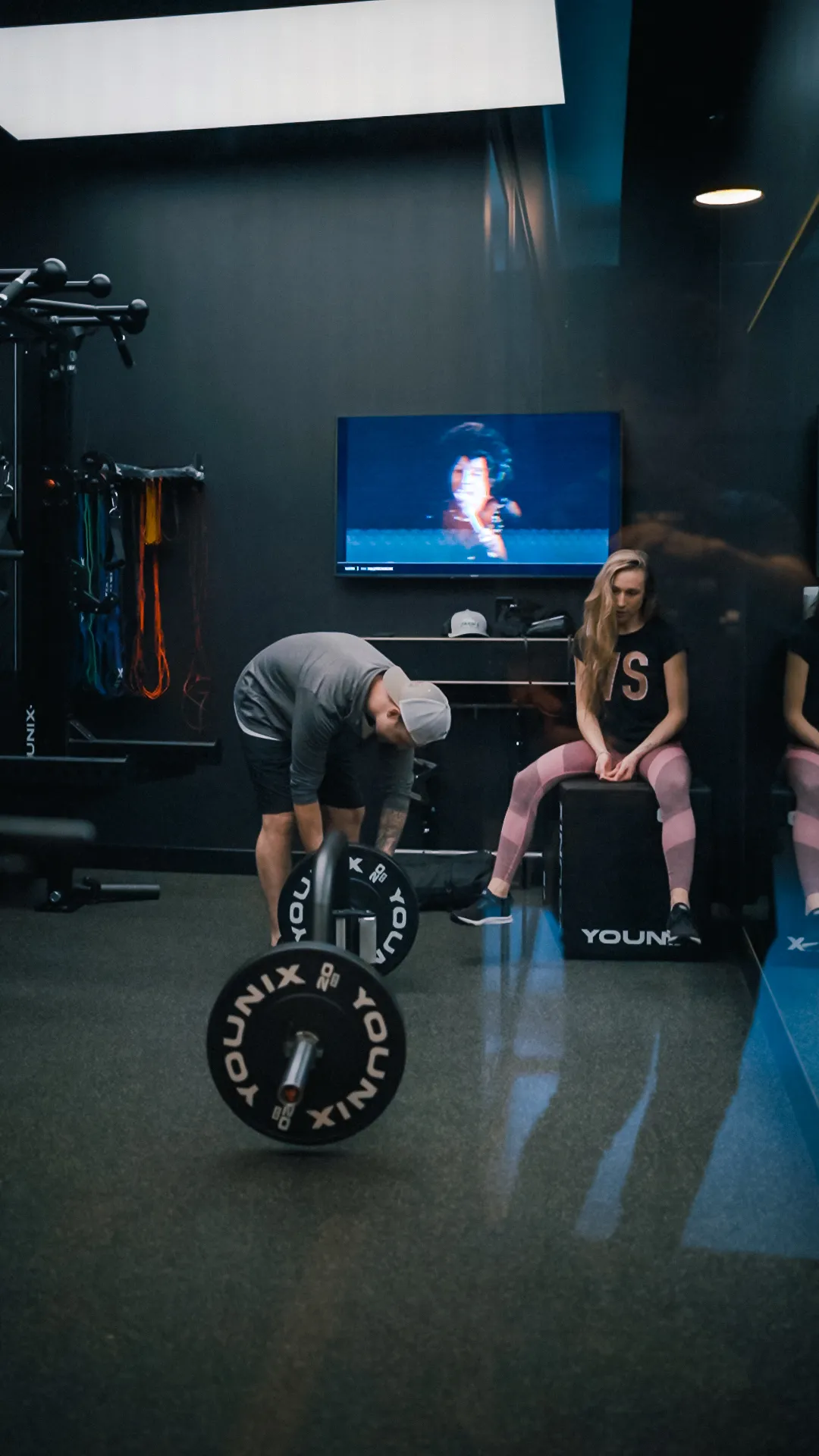
Yes — semi-private training almost always costs less per person than 1-on-1, because two to four clients split the cost of the same coaching hour. The interesting question isn’t the discount; it’s the trade behind it. You’re exchanging some of the coach’s undivided attention for a lower price, and whether that exchange is a bargain or a false economy depends entirely on who’s standing next to you.
Why the per-person math works
The mechanics are simple. A coach’s hour has one price; divide it among three people and each pays a fraction — typically landing somewhere between group-class pricing and full 1-on-1 rates. Meanwhile the coach usually earns more total for the hour than a single session would pay, which is why good trainers offer the format enthusiastically rather than grudgingly. It’s that rare pricing structure where both sides genuinely come out ahead — on paper.
A hypothetical makes it concrete: a coach who charges $100 for a private hour might run the same hour for two clients at $65 each. Each client saves meaningfully, the coach grosses more for the identical sixty minutes, and the only thing that got divided was attention. Whether that division matters is the entire question — and it’s answered by who else is in the room, not by the price list.
“On paper” is doing some work in that sentence, which brings us to the trade.
What you give up
Attention divides. Three people means your form gets watched a third of the time, your questions wait their turn, and the coach’s eyes are elsewhere when your deadlift gets interesting. Programming compromises too: a shared session can’t fully serve a 32-year-old chasing a pull-up and a 58-year-old rebuilding after years off, so mismatched groups drift toward the middle — which serves no one completely.
Scheduling compounds. Every session now requires multiple calendars to agree, and one person’s cancelled week ripples through everyone’s consistency. And pace becomes a negotiation: rest periods, exercise order, and session tempo all get averaged across the room, which experienced lifters feel more acutely than beginners do.
The honest summary: semi-private is a discount on coaching if the group is right, and a discount on attention if it isn’t. The price is knowable in advance; which of the two you’re buying only reveals itself once training starts — so choose your partners with at least as much care as your coach.
Don’t confuse it with its look-alikes
Four formats get blurred together in pricing conversations, and they’re different products. Semi-private means each person follows their own program while sharing the coach’s hour — individualized training at a split price. Small-group training commonly runs one shared program for four to eight people; cheaper again, but the programming is collective. Group classes scale one workout to a whole room, with price and personalization falling together. And partner-splitting a single program — two people simply alternating sets of the same workout — is the cheapest arrangement and the least individual of all.
The label on the invoice matters less than one clarifying question: “Will I have my own program, written for my goals and my body?” If yes, you’re buying coaching at a discount. If no, you’re buying a very small class — which can still be a fine purchase, as long as you’re pricing it against classes rather than against coaching.
When semi-private genuinely shines
The format is at its best when the group arrives pre-matched:
- Couples. Shared goals, one calendar, built-in accountability at home — couples personal training is the format’s strongest case.
- Friends at similar levels. Two colleagues chasing comparable goals get most of 1-on-1’s value, split the bill, and inherit a workout partner who notices when they skip.
- Accountability seekers. Some people attend for the other person more than for themselves. That’s not weakness; it’s engineering. The commitment device is part of what you’re buying.
The pattern underneath: semi-private works when the group would have chosen each other anyway, and struggles when a facility assembles strangers to fill a slot. If you’re being offered a spot in an existing group, ask who’s in it and what they’re training for before you ask what it costs.
How it works in a private suite
Setting changes the semi-private experience more than most people expect. At FlexWerk, a shared session runs inside a FlexSpace Plus — 230 square feet, up to five guests, with a rack, cables, and dumbbells supporting 1,100+ exercises — so “training with a partner” means your own room and your own coach behind a closed door, not two people negotiating a corner of a crowded floor. And because clients of FlexWerk trainers receive free guest access, the facility adds no per-person fee on top of what your coach charges; the spaces page shows what the rooms actually look like.
The private setting also blunts semi-private’s classic weakness. When the room holds only your group and your coach — no strangers, no noise, no equipment negotiation — the divided-attention problem shrinks, because everything else that usually competes for the coach’s focus has been removed along with the crowd.
Pricing for the format is set by each coach, like everything else they charge. If you’re weighing semi-private against solo sessions — or wondering whether a spouse, friend, or teenager belongs in your hour — raise it at the free consultation: the answer will come with real numbers, and the first session is free while you find out how the shared format actually feels.
Related questions
How many people count as semi-private?
Commonly two to four clients with one coach. Beyond that it drifts into small-group territory, where programming gets more standardized and attention thinner.
Is semi-private training good for beginners?
Yes, if the group is matched on level and the coach programs individually. A beginner paired with advanced partners tends to get the leftover attention.
Can my partner and I share sessions at FlexWerk?
Yes — FlexSpace Plus suites host up to five guests, and clients of FlexWerk trainers receive free guest access. Ask about the format at the free consultation.