
Decision Guides
App Coaching vs. In-Person Training: An Honest Comparison
App coaching sells you a plan; in-person training sells you a plan plus execution plus accountability. If you already lift with solid form and mostly need intelligent programming, a good online coach is real value at a fraction of the price. If the gap between knowing what to do and actually doing it is your real problem — and for most people it is — in-person wins, and it isn’t particularly close.
What app coaching does surprisingly well
The honest case for online coaching is strong. It typically costs a fraction of in-person work, billed monthly instead of per session. It travels with you — same program in a hotel gym in Denver as at home. It unlocks specialists: the coach who’s perfect for your exact goal doesn’t have to live in your zip code. And the good ones deliver genuinely intelligent programming with check-ins, video review, and adjustments.
For a certain client — experienced, disciplined, technically sound, geographically stuck — it’s not a compromise at all. It’s the correct product. Picture the lifter with five consistent years under the bar who just relocated for work, knows exactly what a bad rep feels like, and needs a smarter block than they’d write themselves: that person loses very little by going remote, and their wallet notices the difference immediately.
Where the app model breaks down
Three cracks appear predictably. First, form feedback is delayed and partial: your coach reviews a video of Tuesday’s deadlift on Thursday, from one camera angle, after any damage is done. A cue that would’ve taken three seconds in person becomes a comment you’ll try to remember next week.
Second, accountability by notification is weak accountability. Skipping a session your app assigned costs you a gray checkmark. Skipping an appointment where a human being is standing in a room waiting for you costs you something real — which is precisely why accountability is the actual product in most coaching relationships, whatever the brochure says.
Third, beginners don’t know what they don’t know. Self-reporting “that felt fine” requires the experience to know what wrong feels like — a beginner’s confident check-in and a problem brewing in their hip can be the same message. The people apps serve worst are the people who need coaching most.
What being in the room changes
An in-person coach corrects the rep while it’s happening — hand on the bar, cue in your ear, weight adjusted before the next set based on how the last one actually moved. They read what you didn’t report: the stress in your shoulders, the short night’s sleep, and they reshape today’s session accordingly. And the appointment itself does silent work; sessions that exist at a specific time, with a specific person, in a specific room, get attended.
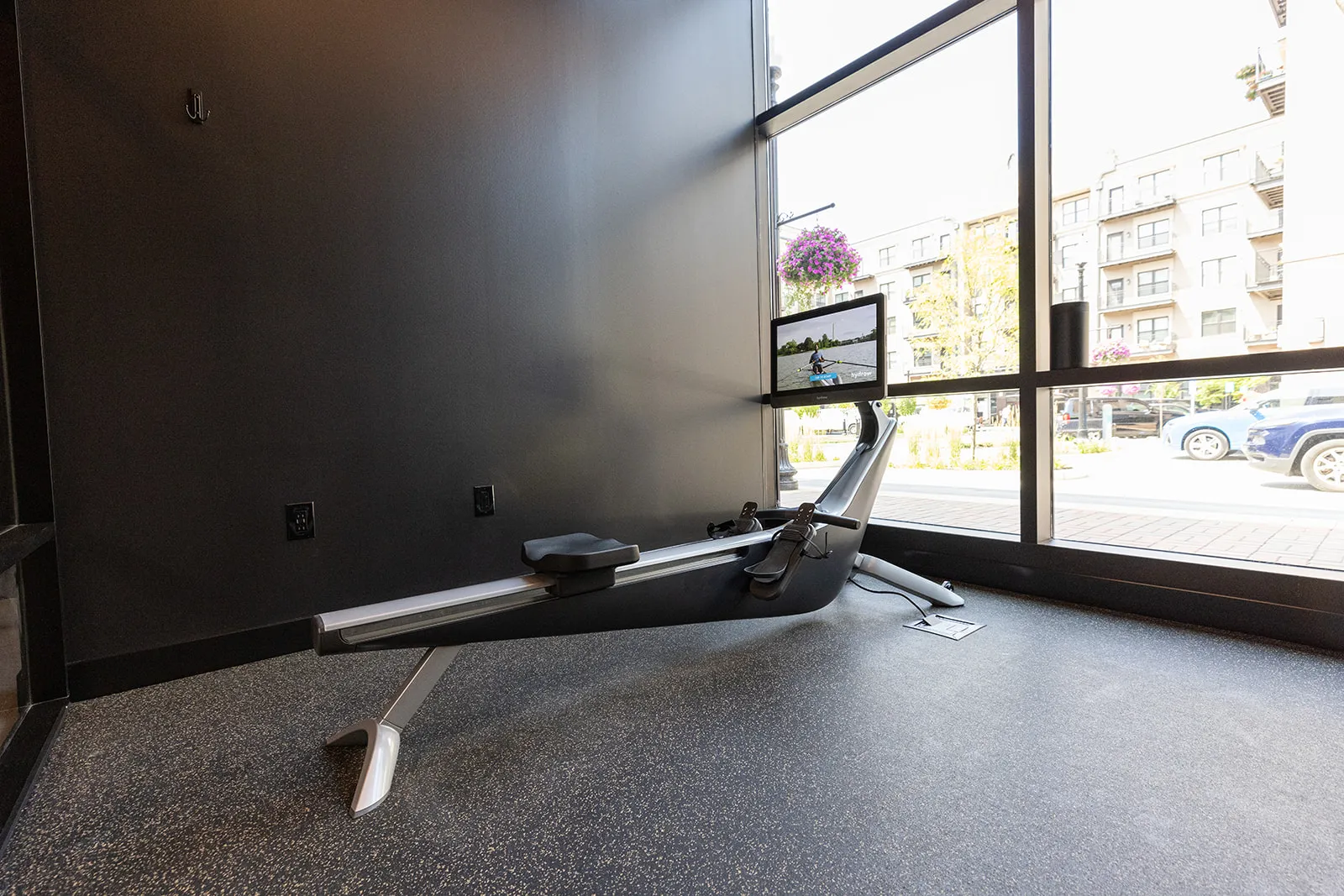
The room matters more than people expect, too. At FlexWerk that room is a private suite — rack, cable system, dumbbells, connected cardio like HYDROW rowers — with no gym-floor chaos to navigate and no waiting built into your hour. Removing environmental friction is half of what keeps a program alive through its boring middle weeks.
The honest cost gap
Online coaching commonly runs as a modest monthly subscription; in-person coaching in Carmel typically lands at $40–70 per session at the big-box tier and $75–125+ at the premium/private tier. Multiply by a realistic frequency and the annual difference is real money — no point pretending otherwise.
The right way to read that gap: you’re not paying more for the same product delivered locally. You’re paying for real-time correction, adaptive sessions, and dramatically higher follow-through. If those aren’t your bottlenecks, keep the subscription and spend the difference on good shoes. If they are — and an honest look at your last year of self-directed training will tell you — the cheaper product is the more expensive one, because it’s the one that quietly doesn’t get used.
One more accounting note: subscriptions are uniquely easy to keep paying and stop using. An app charge renews silently whether you opened it or not, while an unattended in-person session involves telling a human being to their face — which is exactly the friction you’re buying.
The hybrid most people land on
This decision isn’t binary, and the most durable setups usually blend both: one or two in-person sessions a week for technique, progression, and the appointment effect, with remote programming covering the days between. Travel weeks shift to the remote side entirely — how to handle training when traveling covers that playbook. Suites with WiFi and a TV/monitor make the blend seamless in the other direction, too; plenty of coaches use them to review footage or run a program walkthrough with a client on screen.
A typical hybrid week looks like this: Tuesday in the suite for the heavy, technical work that deserves live eyes; Thursday’s simpler session done solo from the coach’s app; a Sunday check-in message with the week’s numbers. You get most of the in-person results at a meaningfully lower monthly cost — which is why coaches themselves increasingly recommend the structure rather than resisting it. The blend only fails when the in-person anchor disappears entirely; drop it, and most people quietly revert to the app-only attendance curve within a couple of months.
If you’re weighing the two, the cheapest possible experiment is decisive: book a free consultation, experience one fully coached in-person session at no cost, and then judge the app subscription against something concrete instead of something imagined.
Related questions
Is online coaching actually effective?
For experienced, self-motivated lifters who mainly need programming — yes, genuinely. For beginners or anyone whose real problem is consistency, the results gap versus in-person is significant.
Which is better for a complete beginner?
In-person, and it's not close. The first months are when movement patterns get built, and video feedback arrives too late to shape a rep that's happening right now.
Can I combine the two?
Yes — it's the most common end state: in-person sessions for technique and accountability, remote programming for the days in between and the weeks you travel.