
Goals
Weight-Loss Coaching That Outlasts January
Most weight-loss attempts don’t fail from lack of information — you already know roughly what to do. They fail from lack of structure, and that’s precisely what coaching replaces: a weight-loss personal trainer supplies the accountability, the muscle-preserving training, and the measurement that turn a January resolution into a different body in July.
Here’s what coached fat loss actually consists of — and the parts no coach can do for you.
Why the January pattern repeats
The resolution cycle has a predictable anatomy: high motivation funds two aggressive weeks, the aggression makes the plan unsustainable, life interrupts, the plan has no mechanism for absorbing interruption, and the whole attempt quietly ends — until motivation refills months later. Repeat annually.
Notice what’s missing from that cycle: nobody was watching, nothing was measured, and the plan’s intensity made abandonment inevitable. Coaching attacks all three. Appointments replace motivation as the reason you show up. Scheduled re-tests replace vibes as the verdict on progress. And a coach paces the plan for the year you’re actually going to live, not the fantasy month where nothing goes wrong. That’s the thesis explored in why accountability is the real product — with weight loss, it’s the difference that compounds.
What a coach actually changes
Concretely, coached weight loss adds four mechanisms that solo attempts lack:
- The appointment effect. A person expecting you at 6 AM converts “should” into “scheduled.” Attendance is the single strongest predictor of outcomes, and appointments protect attendance.
- Strength training as the base. Sessions are built around progressive resistance work — the thing that tells your body to keep its muscle while fat leaves.
- A feedback loop with teeth. At FlexWerk, you start with an InBody body-composition scan at your free consultation and re-test on schedule, so decisions are made on data: fat down, muscle held, plan working — or not, and adjusted.
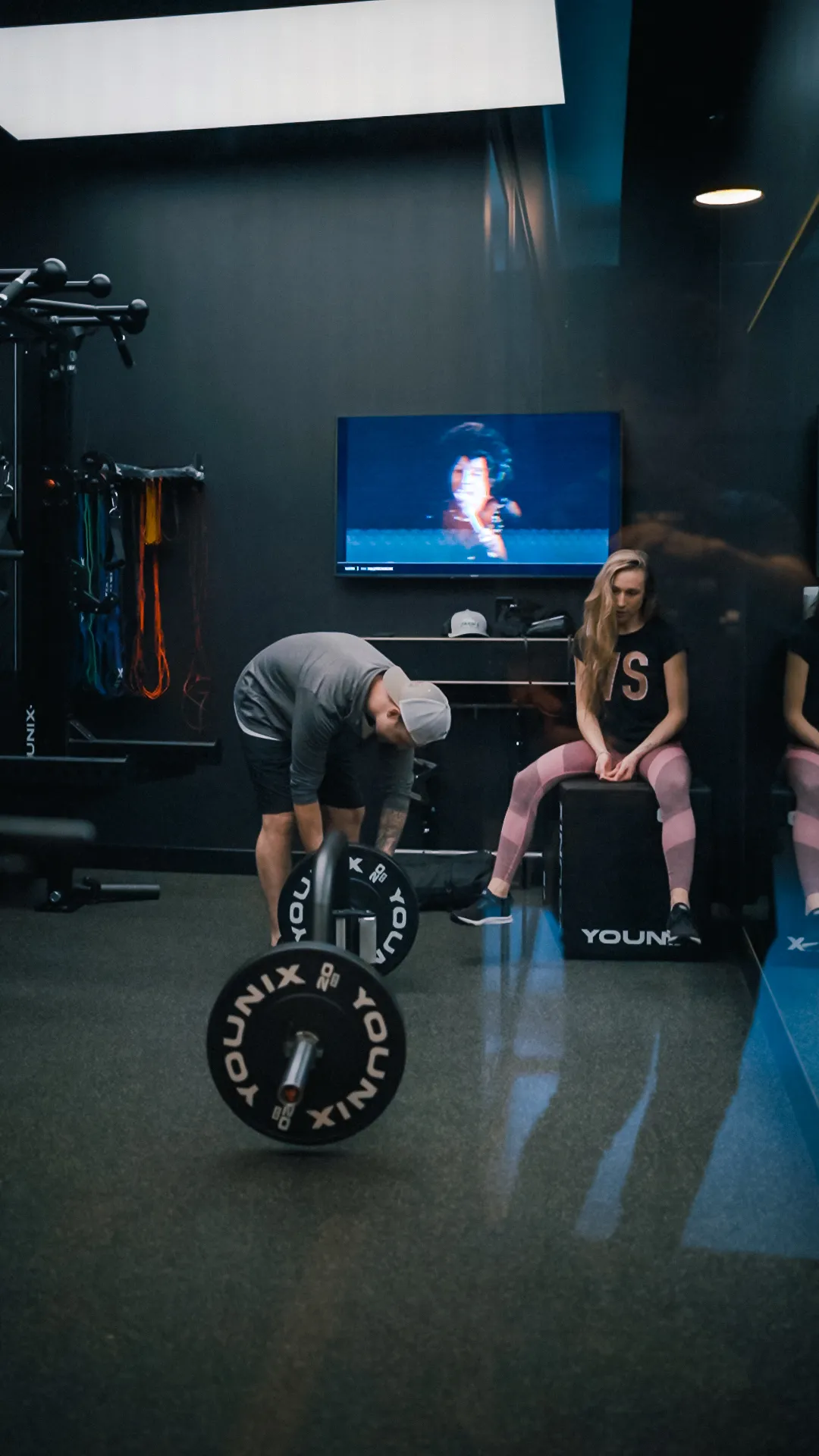
- An environment you’ll return to. Sessions run in a private suite — no crowd, no mirrors-and-strangers gauntlet, which matters enormously for people who find gyms hardest exactly when they’re heaviest.
Muscle is the point, not the enemy
The scale-only mindset treats all lost pounds as equal. Your body disagrees. Weight lost through undereating and cardio alone is commonly a blend of fat and muscle — and losing muscle lowers your metabolic rate, softens the “after” you were working toward, and sets up the regain that makes next January necessary.
This is why a good coach seems weirdly obsessed with your protein and your lifting log while you’re obsessed with the scale. Preserved muscle is what makes fat loss visible, keeps daily calorie burn from cratering, and makes maintenance realistic afterward. When the scale stalls but your clothes keep loosening, that’s often body recomposition happening — and it’s a win the bathroom scale is structurally incapable of reporting.
The honest part: what coaching can’t do
A coach cannot out-program your kitchen. Training protects muscle and builds the structure, but the calorie deficit itself lives in your eating — which is why FlexWerk coaching pairs the training with habit-level nutrition work: protein anchors, food-log reviews, and realistic guardrails rather than punishing meal plans. (Trainers coach eating habits; they don’t prescribe clinical diets — anything medical, from thyroid to medications that affect weight, belongs with your physician or a registered dietitian.)
Two more honest notes. Progress will not be linear — plateaus and up-weeks are features of human physiology, not evidence of failure, and part of a coach’s job is keeping you from torching the plan during them. And if you genuinely thrive on structure alone — some people do — a self-run program with honest tracking can work; coaching is for the majority of us whose history says otherwise.
Plateaus deserve their own paragraph, because they end more weight-loss attempts than anything else. A stall of two or three weeks is normal physiology — bodies adapt, water shifts mask fat changes, and life intrudes. The uncoached response is despair and abandonment; the coached response is diagnostic: check the food log, check the sleep, check the re-test, and adjust one variable. Half the value of having a coach during a plateau is simply having someone who has seen a hundred of them and knows the difference between a stall and a stop.
What the first ninety days look like
FlexWerk’s phased system maps cleanly onto fat loss: Reset establishes habits, baseline numbers, and training rhythm; Build does the heavy lifting — literally — as strength work and a moderate deficit change your composition; Refine dials in nutrition detail as the visible changes arrive. The full picture of coached results runs on that arc, and the honest timeline is the one worth planning around: habits in weeks, mirror in months, comments-from-friends after that.
The part nobody sells — keeping it off — is where this approach quietly separates itself from diets. Because the weight came off through habits you practiced and muscle you kept, maintenance isn’t a new skill to learn; it’s the same life with slightly more food. That’s the structural difference between coached fat loss and every restart you’ve already done.
If this is the year the pattern breaks, skip the resolution entirely and start with the measurement instead — a free consultation, a baseline scan, a coach who’s watched this arc play out many times, and a plan built to still be running in July when the January crowd is long gone.
Related questions
Can I lose weight with training alone, without changing how I eat?
Rarely, and slowly — training's caloric burn is smaller than most people hope, and eating adjusts to erase it. Training's real weight-loss job is protecting muscle and driving the habit structure while nutrition creates the deficit.
Why does my coach care about muscle if my goal is losing weight?
Because weight lost without strength training is partly muscle, which lowers the very metabolism you're counting on and produces the 'smaller but soft' outcome most people don't want. Keeping muscle is what makes lost weight look and stay lost.
How fast should the scale move?
Sustainable fat loss is commonly in the range of about one-half to one percent of body weight per week, with plateaus along the way. Your InBody re-tests matter more than any single weigh-in — they show whether what you're losing is actually fat.