
Getting Started
Can I Train With High Blood Pressure? (Doctor Clearance Explained)
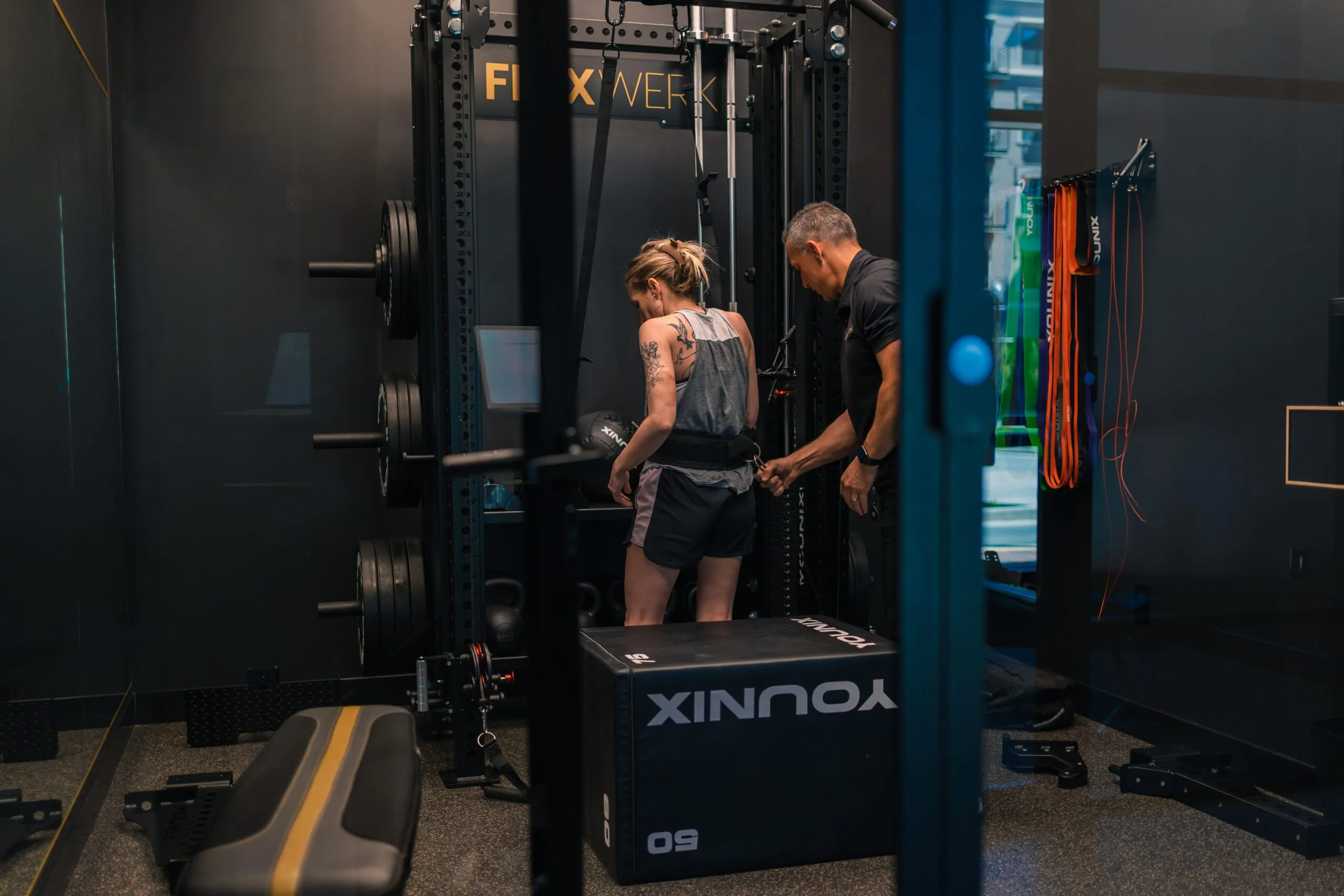
Often, yes — many people with high blood pressure train, and regular physical activity is something physicians widely encourage — but the sequence is non-negotiable: your physician clears you and sets any limits first, and your trainer programs inside those limits second. Neither professional replaces the other. Your doctor owns the medical question (“is exercise appropriate for me, and with what precautions?”); your coach owns the training question (“given those precautions, what’s the best program?”). This page explains how that handoff works — it is not medical advice, and your physician is the only person who can answer the medical side for you.
Step one: the physician conversation
If you’ve been diagnosed with high blood pressure — or you take medication for it — the path to training starts in your doctor’s office, not a gym. This isn’t defensive box-ticking; it’s how you get a program built on facts. Your physician knows your numbers, your medications, and your overall picture, and the conversation is usually short and practical: I want to start training with a coach — anything I should know or avoid? Doctors have this conversation constantly, and because physical activity is broadly something medicine wants more of, the answer is rarely “don’t.” It’s usually “yes, and here’s the frame” — which might mean no restrictions at all, or specific guidance about intensity, monitoring, or symptoms to watch. Whatever your physician says, get it in plain words you can repeat, because those words become your coach’s programming boundaries. If it’s been a while since your last checkup, this is the nudge — the blog piece my doctor said I need to exercise covers the flip side, where the physician conversation is what starts the whole journey. Bring specifics to the appointment: that you’re planning coached strength and cardio work, roughly how many sessions a week, and that your coach will follow whatever guidance comes back. Doctors give better answers to concrete plans than to vague intentions.
How screening catches it — and what “clearance” looks like
Blood pressure is one of the standard flags in trainer screening. The PAR-Q — the short readiness questionnaire good trainers use before programming anything — asks directly whether a doctor currently prescribes you medication for blood pressure or a heart condition, and a yes routes you to your physician before intensity ramps up. “Clearance” in practice is simply your physician’s go-ahead, in whatever form they prefer: sometimes a brief note, often just clear verbal guidance you relay to your coach. It may come with conditions — your physician might set intensity guidance, ask you to monitor readings, or schedule a follow-up — and every one of those conditions is information your coach wants, because programming inside real boundaries beats guessing at invisible ones. Note what this process is not: it’s not a trainer interpreting your medical situation. A coach’s job at the screening stage is to ask, flag, and refer — and a trainer who waves off a blood-pressure disclosure with “you’ll be fine” is exactly the trainer to walk away from. Timing matters less than people fear, too — screening happens at the very start of the process, so the physician conversation typically slots in before your first working session rather than interrupting anything already underway.
What your coach does with the clearance
Once your physician has set the frame, coaching proceeds mostly like coaching — with the guidance baked in. Concretely, working with a cleared client, a good coach will typically:
- Program inside the physician’s guidance, verbatim. If your doctor set intensity or monitoring conditions, those are the program’s fixed walls, not suggestions.
- Progress gradually and watch you closely. Conservative early loading and real-time attention to how you’re responding are standard good practice — and easier in a one-on-one setting than on a busy floor.
- Build in honest check-ins. How you’re feeling, how sessions are landing, anything your physician asked you to track — surfaced every session, not assumed.
- Treat symptoms as full stops. Dizziness, chest discomfort, anything alarming: the session pauses and the report goes to your doctor. Coaches never “push through” physician territory.
What your coach will not do is act as a second doctor — no interpreting readings, no medication opinions, no overriding what your physician said. That boundary isn’t a limitation of good coaching; it’s the definition of it. A one-on-one suite setting helps in one specific way here: with a single client in the room, changes in how you’re responding get noticed in real time, rather than between glances at three other clients on a busy floor.
What to tell your coach, and where to start
Bring your coach three things: your physician’s guidance in plain words, your medication list (screening covers it anyway, and completeness matters), and your agreement to say something the moment anything feels off mid-session. That last one is a two-way promise — you report honestly, and a good coach responds by adjusting rather than judging. From there, the practical first step is the same one everyone takes at FlexWerk: a free consultation, where the goals-and-history conversation happens, a free InBody body-composition scan sets your measurable baseline, and FlexConnect matches you with a coach whose specialties fit your situation — with the physician conversation slotted in before intensity ever climbs. Training with high blood pressure isn’t about finding a coach willing to ignore it; it’s about assembling the right order of professionals — doctor first, coach second, both fully informed. Book the checkup, book the consultation, and let each expert do the job they’re actually trained for.
Related questions
Should I ask my doctor before hiring a trainer?
If you have high blood pressure or take medication for it, yes — a short conversation with your physician about exercise comes first, and whatever guidance they give becomes the frame your coach programs inside.
Can a trainer replace medical care for blood pressure?
No. Trainers coach exercise; they don't diagnose, adjust medication, or manage a condition. Your physician manages the blood pressure — your coach builds training that respects the physician's guidance.
What if I feel dizzy or unwell during a session?
Say so immediately and stop — a good coach ends the set, not the honesty. Symptoms like dizziness or chest discomfort are physician territory: report them to your doctor before training resumes.