
Getting Started
What Is a Par-Q and Why Do Trainers Ask for It?
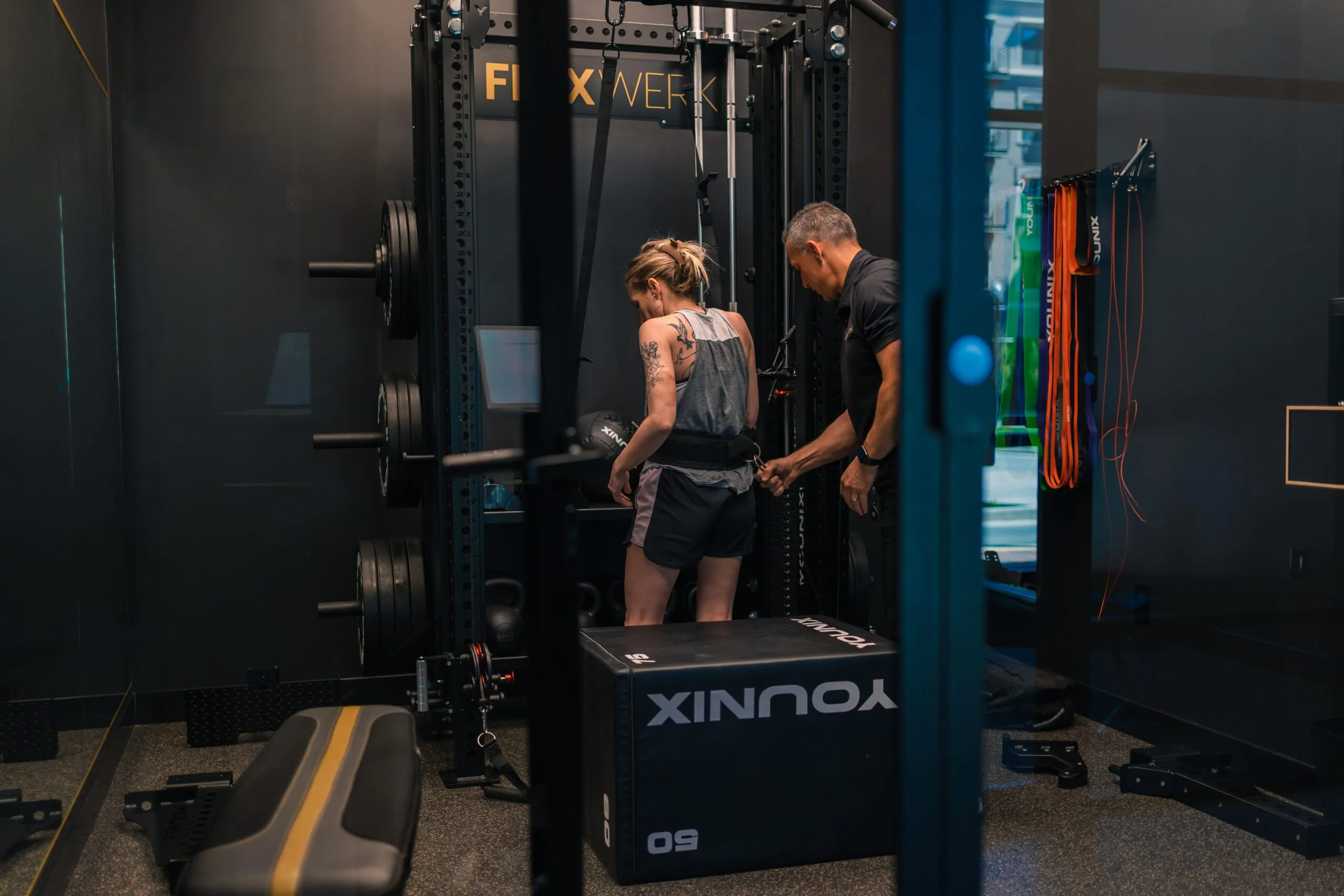
A PAR-Q — Physical Activity Readiness Questionnaire — is a short screening form, classically seven yes/no questions, that identifies whether you should talk to your physician before significantly increasing your physical activity. Trainers ask for it because it draws the professional line exactly where it belongs: a coach’s job is to build your program, a physician’s job is to judge your medical readiness, and the PAR-Q is the handshake between the two. It takes about two minutes, and for most people it’s the shortest paperwork of their lives.
What the PAR-Q actually asks
The questions target the situations where jumping into harder exercise deserves a medical look first. In plain language, the classic form asks whether:
- a doctor has ever said you have a heart condition and should restrict activity;
- you feel chest pain during physical activity — or have felt it while not being active;
- you lose your balance from dizziness, or ever lose consciousness;
- you have a bone or joint problem that could be made worse by activity;
- a doctor currently prescribes you medication for blood pressure or a heart condition;
- you know any other reason you shouldn’t do physical activity.
Notice the design: it isn’t asking whether you’re fit, thin, strong, or experienced. It’s asking whether anything in your health picture deserves a physician’s judgment before the intensity rises. Fitness is the trainer’s territory; these six flags are not. Different providers use updated variants of the form — some longer, some digital, some folded into a broader intake — but the architecture is always the same: a handful of high-signal questions that cost two minutes and catch what matters.
What a “yes” means — and what it doesn’t
Answering yes to a PAR-Q question is not a rejection, and treating it like one is the biggest misunderstanding about the form. A yes means one thing: talk to your physician before ramping up. In practice, that conversation usually ends with some version of “yes, exercise — here’s what to keep in mind,” because physical activity is broadly something doctors want more of, not less. Your doctor might clear you outright, clear you with guidance, or want to look at something first — and every one of those outcomes is the screen working as designed. Blood-pressure medication is a common example: it flags on the form, the physician sets the terms, and training proceeds inside them — the full walkthrough is in training with high blood pressure. What a yes absolutely doesn’t mean is that training isn’t for you. Some of the people who benefit most from coached, progressive exercise are exactly the people whose forms have a yes on them — they just start with one extra conversation, held with the right professional. If it helps, reframe the errand: you’re not asking permission to exercise, you’re collecting the boundary conditions for your program — intensity guidance, anything to monitor, symptoms that mean stop. Those specifics make your coach’s job easier, not harder.
Why good trainers treat the form as non-negotiable
A trainer who screens you before training you is telling you three things about how they work. First, they respect scope: coaches are experts in programming and progression, not in cardiac risk, and the PAR-Q is how a professional refuses to freelance in someone else’s field. Second, they’re protecting you on day one, when the trainer knows the least about you and assumptions are most dangerous. Third, the answers feed the program even when nothing flags for referral — a yes on the joint question shapes exercise selection from the first session, which connects directly to how to tell a trainer about an old injury. Run the logic in reverse for the red flag: a trainer who takes your money and starts loading a barbell without asking a single health question is skipping the step every credible standard in the industry treats as mandatory. Screening isn’t bureaucracy; it’s the difference between a professional and an enthusiastic person with a clipboard. It also sets the tone for everything downstream: a coach who is careful with your intake tends to be careful with your loading, your progressions, and your time.
The form is the floor — the conversation is the point
A PAR-Q is deliberately blunt: seven questions can sort “proceed” from “check first,” but they can’t capture the shoulder that only aches on overhead work, the back that flares twice a year, or the knee surgery from 2019. That texture comes from the conversation around the form, which is why a good first meeting pairs the screen with real questions about your history, lifestyle, and goals — the fuller landscape mapped in what questions a trainer asks. At FlexWerk, that conversation is the front door of the whole process: a free consultation covers your goals, schedule, and health picture, includes a free InBody body-composition scan as your measurable baseline, and matches you with a coach through FlexConnect based on goals, schedule, personality, and specialties — so the person reading your screen is also the person suited to program around it. (Consultations are free precisely so this screening step never has a price barrier in front of it.) Answer the seven questions honestly, bring the texture the form can’t hold, and let your physician handle anything that flags. That’s the whole system — two minutes of paper, one honest conversation, and a program built on what’s actually true about you.
Related questions
Will answering yes on the PAR-Q stop me from training?
Almost never permanently. A yes typically means one added step — a conversation with your physician before ramping up — after which most people train with whatever guidance their doctor provides.
Is the PAR-Q a medical exam?
No. It's a screening questionnaire, not a diagnosis — it sorts who can proceed directly from who should check with a physician first. Only your doctor can answer the medical questions it raises.
Do I need a doctor's note to start with a trainer?
Most people don't — a clean screen means you proceed. If your answers flag something, your trainer may ask you to check with your physician first, and many clients simply bring back whatever guidance the doctor gives.