
Results & Process
How Long Should I Commit to Personal Training?
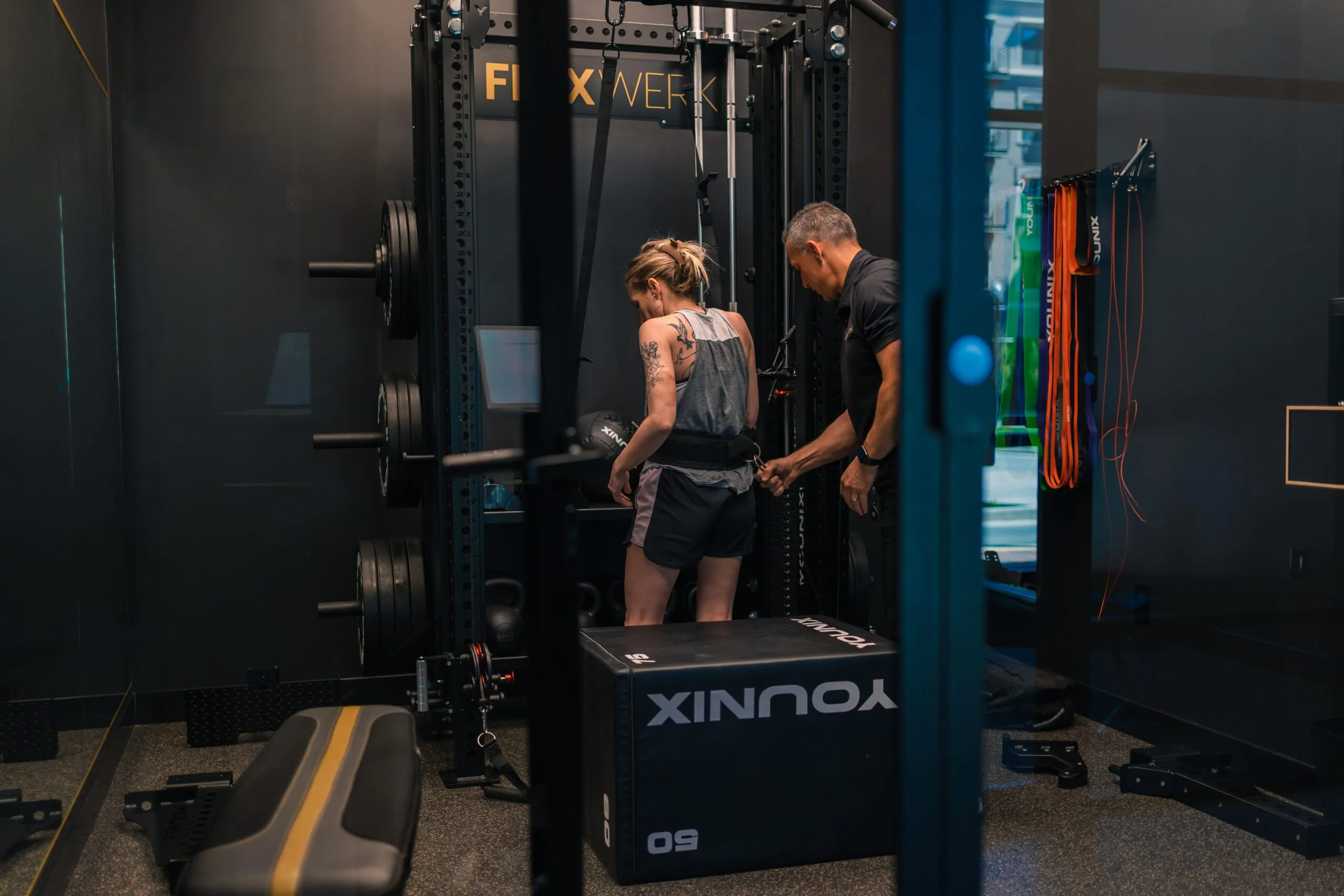
Commit to at least 90 days. That’s the honest minimum for judging whether personal training is working — long enough for strength, habits, and visible change to show up, short enough that you’re not signing your life away. After that, think in 90-day blocks: reassess against real measurements, decide the next block deliberately, and repeat for as long as the value is obvious.
Why 90 days is the fair test
Physiology sets this number, not marketing. The typical arc — laid out in detail in how long results take with a trainer — runs: felt changes (strength, energy, sleep) inside the first month, visible changes around weeks eight to twelve, and the results other people comment on across a full 90 days and beyond.
Quit at day 30 and you’re canceling the program at precisely the moment its invisible groundwork is about to surface. It’s the fitness equivalent of digging a well, stopping a few feet short of water, and concluding there’s no water. A 90-day commitment isn’t a sales device — it’s the minimum honest sample size.
There’s a financial logic here too. Coaching costs real money, and the worst way to spend it is in four-week fragments — long enough to pay, too short to collect. If budget is a genuine constraint, a smaller weekly frequency sustained for 90 days will almost always outperform a bigger one abandoned at 30. Ninety days also happens to be the window where the habit itself sets — and the habit is the asset that outlasts any single block.
What each month of the commitment is for
FlexWerk coaching makes this arc explicit with a phased 30/60/90 system, and it’s a useful lens even in the abstract:
- Reset (roughly the first 30 days): habits, calories, movement quality, baseline. The InBody body-composition scan from your first visit is the starting line everything gets measured against. This month feels unspectacular and is quietly the most important.
- Build (the middle stretch): progressive strength work does its compounding thing — metabolism, muscle, body composition. This is where clothes start fitting differently and the re-test shows movement the mirror hasn’t caught yet.
- Refine (day 60 onward): nutrition detail, sharper programming, visual change. The phase where results start looking intentional rather than incidental.
Knowing which phase you’re in kills the mid-program doubt that sinks most fitness attempts. Week five isn’t “not working yet” — it’s Build doing exactly what Build does. The phases also give your check-ins substance: instead of a vague “how’s it going,” you and your coach are asking whether this phase’s specific job — habits, then strength, then detail — is getting done.
After the first 90 days: three good outcomes
Here’s the part sales pages skip — what happens when the first block ends. There are three legitimate paths, and a trustworthy coach will tell you which one you’re on:
- Continue at full frequency. The results are compounding, you value the structure, and the next 90 days have a clear target. Most people chasing a bigger transformation take this path for several blocks.
- Taper to a maintenance rhythm. You’ve built competence and habits; now fewer sessions — or periodic check-ins with re-tests — keep you honest at lower cost.
- Graduate. You train confidently alone and keep the coach’s number for tune-ups. A coach who’s done their job well has been making themselves progressively less necessary — if yours bristles at that idea, that’s information.
What you’re avoiding with 90-day blocks is the zombie commitment: paying indefinitely out of vague guilt, with no measurement and no decision points. Deliberate renewal beats default renewal. A useful ritual: put the renewal decision on the calendar at the start of each block, attached to a re-test. Deciding next steps with fresh data in hand takes five minutes; deciding them from guilt takes months.
Commit to the process, not just the calendar
A quiet truth about commitment length: the 90 days only count if they’re dense. Twelve weeks with regular missed weeks scattered through them is really seven weeks wearing a twelve-week costume, and it will produce seven weeks of results. The structure of coached training exists to protect that density — a booked one-on-one appointment in a private suite, at a time your calendar defends, with a coach who notices when you drift.
Judge the block by the re-test, not by daily mirror checks. Body-composition measurements at the start and along the way turn “is this working?” from a mood into a number — and they’re also what makes the end-of-block decision easy and unemotional.
If you already know your attendance risk — a travel-heavy job, an unpredictable season — say so up front. A coach who knows the shape of your year builds a program with shock absorbers instead of discovering the potholes live.
Starting the clock
The commitment question answers itself once you reframe it: 90 days is going to pass either way, and the only question is whether there’s a before-and-after on the far side of it. The on-ramp is deliberately low-stakes — a free consultation with a free InBody baseline, then a free first session, before any real commitment enters the picture. See what the coached path looks like at get results, pick a start date, and put the day-90 re-test on your calendar the same week you begin. Ninety days from today has a date — write it down before you talk yourself into “someday,” because programs with end dates get started and open-ended intentions get postponed.
Related questions
Why 90 days and not 30?
Thirty days is mostly invisible wins — strength, energy, habits. Visible change typically arrives in the 8–12 week range, so judging at day 30 means grading the program before its results show up.
Do I have to sign a long-term contract to work with a trainer?
The commitment that matters is to the process, not paperwork. At FlexWerk it starts with a free consultation and a free first session — you earn conviction from experience before committing to anything.
Is personal training something I'll need forever?
No. Some clients graduate to independent training, some drop to a lower frequency for accountability, and some keep coaching because they value it. All three are wins.