
Results & Process
Is Training Twice a Week Enough to See Results?
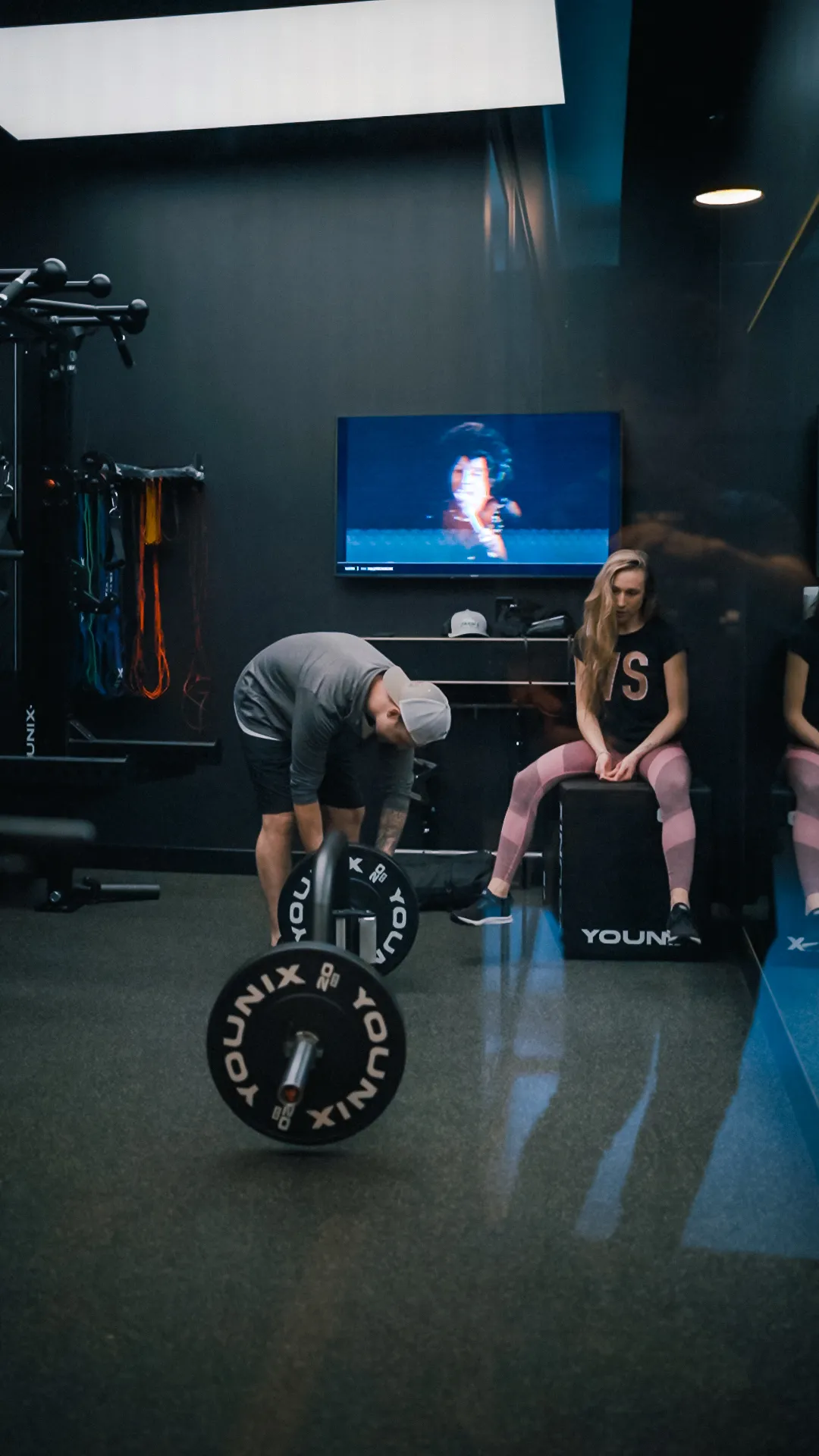
Yes — for most people, two well-programmed training sessions a week are enough to build strength, improve body composition, and look and feel noticeably different within a few months. The catch is in the qualifier: well-programmed, consistently attended, and supported by what happens in the other 165 hours of your week. Two focused hours with a coach beat five aimless ones alone — but they can’t outwork a week that fights them.
What twice a week realistically delivers
Strength responds to quality and progression more than raw volume, and two full-body sessions built on progressive overload are commonly enough to drive months of measurable progress — especially for beginners, for anyone returning after years off, and for busy professionals whose alternative isn’t four sessions but zero. Expect the standard early sequence: strength and energy improvements within the first several weeks, visible change over two to three months, with the full arc laid out honestly in how long results take with a trainer.
Twice a week is also, bluntly, the schedule that survives. It’s the frequency most compatible with a demanding job and a family calendar, which matters because the best training frequency is the one still happening in March. Coaches see it constantly: the two-day client who never misses outruns the four-day client who misses half.
There’s also a compounding effect that session-counting misses: two coached hours teach you things you reuse everywhere — how to warm up, how hard a working set should feel, what a well-built week looks like. The client who trains twice weekly with a coach typically moves better on their own than the one who wanders through four solo sessions.
What twice a week won’t do
Honesty section. Two sessions a week will not produce the fastest possible results — someone training three or four quality days, sleeping well, and eating precisely will typically get there sooner. It’s also not the right dose for everyone: athletes preparing for a sport, experienced lifters chasing advanced strength numbers, and people on a hard event deadline usually need more. The trade-offs at each frequency are covered in how many times a week to see a trainer.
And two sessions can’t compensate for a hostile week. If sleep is wrecked and eating is untracked, the limiting factor isn’t session count, and adding a third session won’t fix it. A good coach will tell you that to your face — it’s cheaper than letting you buy more hours to solve the wrong problem.
The other honest limit is pace of skill development: complex lifts take longer to groove at two exposures a week than at four. That’s not a reason to add days — it’s a reason to expect technique to build over months and let it.
How to make two sessions count
The difference between “twice a week works” and “twice a week disappoints” is almost entirely programming and follow-through:
- Full-body, compound-first sessions. With only two slots, there’s no room for a “chest day.” Each session should touch the big patterns — squat, hinge, push, pull — so everything gets trained twice.
- Progression you can see. Weights, reps, or difficulty should move over time; that’s the engine. If your log looks the same in week nine as week two, frequency isn’t the issue.
- Easy movement between sessions. Daily walking and light cardio between sessions multiply what the two hard days build — without eating into recovery.
- Zero-friction attendance. This is where environment quietly matters. A booked one-on-one appointment in a private FlexWerk suite — no crowd, no waiting for equipment, every minute programmed — is structurally easier to keep than a vague plan to “hit the gym,” and with a 5 AM weekday open, the slot can live where nothing competes with it.
Who should consider more than two
Choose three or more days when: you have a real deadline (a wedding, a competition, a season); you’re an experienced lifter whose progress has genuinely stalled at two; or your goal is athletic performance rather than general strength and body composition. Even then, the honest sequencing advice is to earn the third day — run two days consistently for a couple of months first, then add. People who start at four days rarely stay at four days; people who build from two often do. If you want to see how much a disciplined two-day structure can carry, the two-day-a-week training plan makes the full case.
The reverse question matters too: if you can’t reliably commit to two, the answer isn’t one random session — it’s fixing the schedule problem first, which is a conversation any decent coach will have with you before taking your money.
Seasonality is a legitimate strategy too — plenty of clients run three days through a focused push, then hold at two for the rest of the year. Frequency is a dial, not an identity.
Deciding your number
The right frequency is a function of your goal, your calendar, and your history — which is exactly what a free consultation is for. You’ll talk through all three, get a free InBody body-composition baseline, and leave with a recommended frequency built on your actual life rather than a template. If the honest answer is two, you’ll hear two — and now you know it’s enough. The InBody numbers keep the follow-up honest as well: if two days is producing measurable change on re-test, there’s no case for more; if progress stalls after months, the data — not restlessness — makes the argument.
Related questions
Will I see results faster with three sessions than two?
Generally yes, modestly — three quality sessions typically outpace two. But two sessions you never miss beat three you frequently skip, which is why the sustainable number wins.
What should I do on the days I don't train?
Mostly easy movement — walking is the workhorse — plus whatever short homework your coach assigns. The non-session days are where nutrition and sleep do their part of the work.
Is twice a week enough for weight loss specifically?
It's enough to protect muscle and drive the training side of fat loss, but weight loss is decided mostly by nutrition. Two sessions plus honest eating beats five sessions plus untracked eating.