
Goals
The 2-Day-a-Week Plan That Actually Moves the Needle
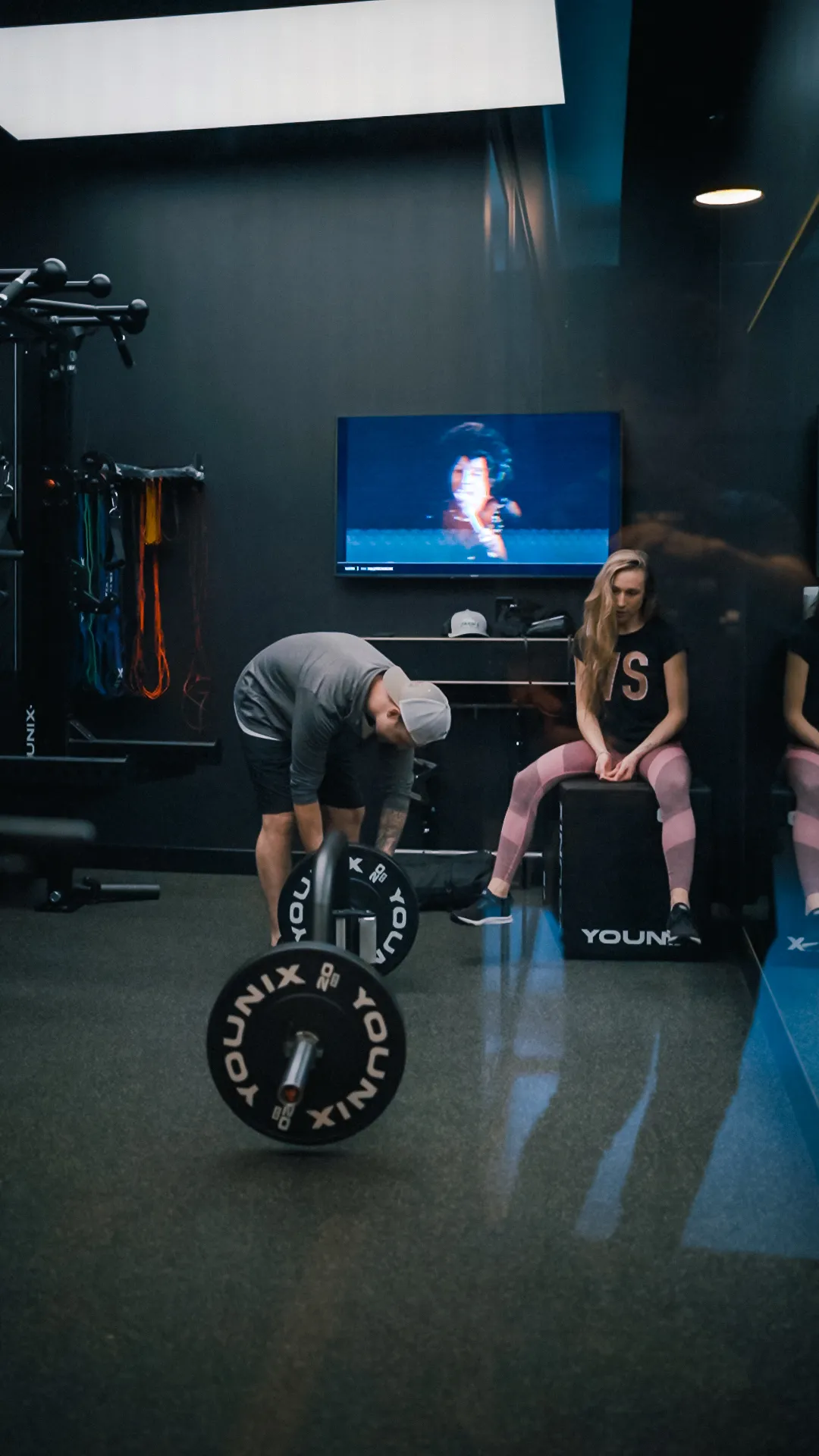
Two full-body strength sessions a week — programmed by a coach, spaced a few days apart, and never skipped — are enough to get measurably stronger, improve your body composition, and feel noticeably different within a couple of months. Two days isn’t the optimal training frequency; it’s the minimum effective dose. That distinction matters, because it means the difference between a 2-day plan that works and one that quietly does nothing is almost never effort. It’s design.
Why two days can be enough
Most of the adaptation you’re chasing comes from the first two hard, well-structured sessions each week. Additional days keep adding benefit, but at a diminishing rate — which is why a busy professional with two protected hours can out-progress someone drifting through five unfocused gym trips. Strength is a stimulus-and-recovery loop: give your body a strong enough reason to adapt, give it a few days to do the adapting, then repeat slightly harder.
The honest caveat: two days is only enough when nothing inside those hours is wasted. A casual twice-weekly circuit maintains what you have; it rarely builds anything new. Two coached sessions — every set intentional, every load recorded, every week nudged upward — build. Run the math and the stakes come into focus: a 2-day plan is roughly 104 sessions a year. That’s genuinely plenty to change a body, and exactly none of them are optional.
This is also why the format suits people whose calendars fight back. Committing to two immovable appointments is realistic in a way five aspirational gym trips never are — which is the entire case for training as a busy professional compressed into one sentence.
What has to be inside each session
Both sessions must be full-body and built around compound movements. Body-part splits collapse at this frequency — a “chest day” you run once a week gives each muscle half the practice it needs. A working template for each hour looks like this:
- One squat or hinge pattern. The biggest strength and metabolic return per minute you can buy.
- One press and one pull. Horizontal emphasis one day, vertical the other, so the week covers every base.
- Single-leg, carry, or core work. The unglamorous middle that corrects imbalances and protects your back.
- Conditioning only if it serves the goal. A short finisher, not a second workout crammed into the last ten minutes.
The engine underneath all of it is progressive overload — small, tracked increases in load, reps, or control from week to week. On a 2-day plan, tracking isn’t bookkeeping; it is the plan. A coach’s real job here is making sure session fifty is meaningfully harder than session five, without you ever taking a risky leap to get there.
A week that survives real life
The spacing matters more than the specific days. Put two to four days between sessions — Monday/Thursday and Tuesday/Friday are the classic pairs — so you recover fully, then stimulate again before the adaptation fades. Around those two anchors, the week stays deliberately light:
- Two or three brisk walks, ideally 30+ minutes.
- One optional easy cardio session — what to do between sessions covers how to add it without stealing recovery.
- Any movement you already enjoy: the Monon on a Saturday morning counts.
Nothing on the in-between days should compromise the two days that count. Good coaches assign a small amount of between-session homework — a step target, five minutes of mobility, a protein floor — because the other 166 hours of your week decide nearly as much as the two trained ones.
In practice, a week might read: Monday 6 AM, coached session one. Tuesday, thirty-minute walk at lunch. Wednesday, nothing formal. Thursday 6 AM, coached session two. Weekend, one long walk or an easy bike ride with the family. That’s it — and held for six months, that modest-looking week outperforms nearly every ambitious plan that collapsed by week five.
What a 2-day plan won’t do
Honesty, because it matters: two days will not build muscle at the maximum possible rate — dedicated hypertrophy programs run three to five days for a reason. It will not, by itself, produce fat loss; that’s decided mostly at the table, with training as the amplifier. And it won’t prepare you for sport-specific endurance demands.
If your schedule can genuinely hold three sessions, three beats two — is twice a week enough? draws that line in more detail. But the ranking that actually matters is this: the plan you attend for a year beats the plan you abandon in March, every single time. Two days you keep is a better program than four days you don’t.
Protecting the two hours that matter
Treat the sessions like board meetings: same days, same times, on the calendar, defended. Early morning works for a reason — decision fatigue hasn’t arrived yet, and nothing has gone wrong with the day. FlexWerk’s weekday hours start at 5 AM partly because so many professionals claim that slot before the workday can object.
Environment is the other half of protection. In a private suite there’s no waiting for a rack, no improvising because equipment is taken, no audience — the full hour is training, which matters enormously when you only have two of them. And an appointment with a coach who knows your name and your numbers is the strongest anti-skip technology yet invented.
If two immovable hours a week sounds like the first realistic plan you’ve heard in a while, a free consultation is where it gets built around your actual calendar — body-composition baseline included.
Related questions
Can I really build muscle training only twice a week?
Yes — more slowly than a 3–4 day program, but two progressive full-body sessions reliably build muscle for beginners and intermediates, provided protein and sleep hold up their end.
Should my two sessions be on back-to-back days?
No. Space them 2–4 days apart — Monday/Thursday is the classic pair — so you recover fully from one stimulus before applying the next.
What should I do on the other five days?
Walk, do easy cardio, and move in ways you enjoy. Most coaches assign light between-session work — steps, mobility, a protein target — rather than extra lifting.