
Audiences
In-Home Trainer vs. Private Suite: Which Actually Gets Results?
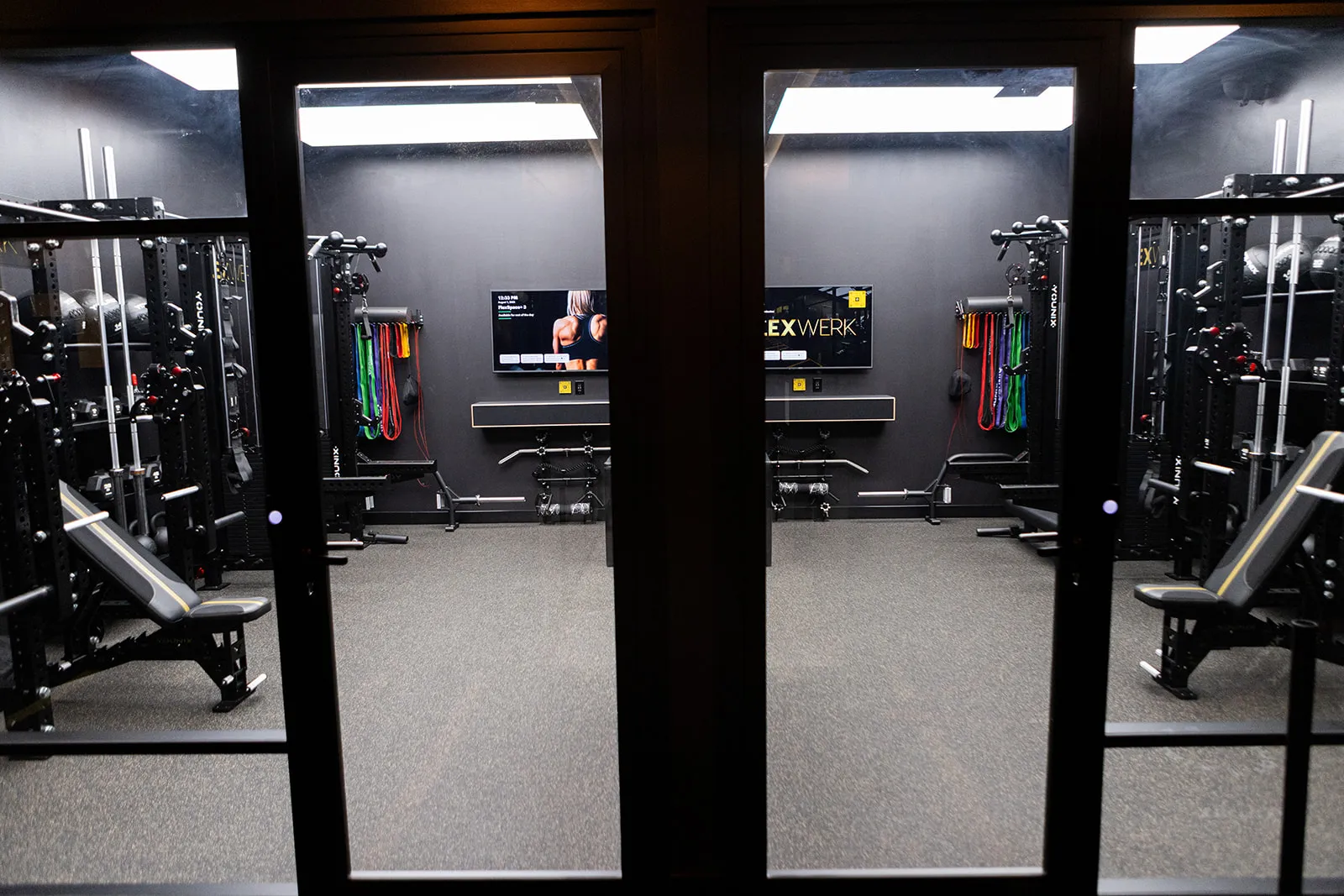
The appeal of an in-home trainer is obvious: no commute, no gym, no audience. But most people comparing the two are really choosing between convenience and capability — and a private training suite delivers the privacy that makes in-home appealing while removing its two structural weaknesses: minimal equipment and a home full of distractions.
Here’s the honest comparison, including the cases where in-home genuinely wins.
The real case for in-home training
Start with credit where it’s due. In-home training is the right answer more often than gym owners like to admit:
- You truly can’t leave. Caring for young kids or a family member, recovering with limited mobility, or working a schedule with no commutable gaps — if leaving the house is the barrier, removing it is the whole game.
- Zero-friction start. For someone who has never once made it through a gym’s front door, a trainer arriving at yours eliminates the hardest step.
- Familiar territory. Some people are simply calmer at home, and calm people train more consistently.
If one of those describes you, an in-home trainer is a legitimate choice, not a compromise — just vet carefully: ask what equipment they bring, how they progress clients past it, and how they handle the day your living room is full of life. The rest of this comparison is for everyone else — the majority of people weighing in-home training not because they can’t leave, but because they don’t want a commercial gym. For that group, the choice is wider than it first appears.
What you give up without real equipment
An in-home session runs on whatever fits in the trainer’s trunk: bands, a few dumbbells or kettlebells, maybe a TRX on a door frame. A skilled coach can do real work with that — for a while. The problem arrives with progress. Strength development eventually requires progressive load, and progressive load requires equipment that doesn’t travel: a rack, a barbell, a full dumbbell run, a cable stack.
For contrast, a standard FlexWerk suite is a 150-square-foot private room built around a custom lifting rack, cable system, and dumbbells — 850+ exercises in the standard space, 1,100+ in the larger FlexSpace Plus. That’s not equipment for equipment’s sake; it’s the difference between a program that progresses for years and one that plateaus when the trunk runs out of options.
The distraction problem nobody mentions
The quieter issue with home training is that home never stops being home. The doorbell, the dog, the kids, the phone on the counter, the laundry you can see from plank position — every one chips at the focus a session is supposed to protect. Trainers who do in-home work will tell you honestly: some clients thrive, and many spend a third of each session half-somewhere-else.
There’s also a psychological line worth respecting. Leaving your space to train marks the hour as different — this is effort time, in a room built for effort, with nothing in view that belongs to any other part of your life. That context switch sounds minor and isn’t; it’s a real ingredient in long-term consistency, and it’s the one thing an in-home session simply can’t manufacture, no matter how good the trainer.
The side-by-side
| In-home trainer | Private suite | |
|---|---|---|
| Commute | None | Short drive |
| Equipment | What fits in a car | Rack, cables, dumbbells, cardio |
| Progression ceiling | Low–moderate | Effectively none |
| Distractions | Your whole household | None — room is yours |
| Privacy | Total | Total during your session |
| Session atmosphere | Your living room | Your music, lighting, monitor |
| Best for | Can’t-leave-home situations | Everyone who can make the drive |
Which should you choose?
Choose in-home if leaving the house is genuinely impossible or if the alternative is doing nothing at all — a limited program done consistently beats a perfect program never started.
On cost, the comparison is closer than people assume. In-home trainers commonly price their travel time into the session rate — you’re paying for the drive as well as the hour — and the equipment limitation means more of those paid hours go toward working around what’s missing. A suite session spends every minute on training with full equipment. Neither model is automatically cheaper; the question is what each dollar buys, and “an hour of fully equipped, fully focused coaching” is a strong answer.
There’s also a hybrid worth naming: some people start in-home to break the inertia, then move to a suite once the habit holds and progress demands real equipment. Nothing about the choice is permanent.
Choose a private suite if you want privacy and progress. You get the thing that made in-home attractive — no gym floor, no crowd, no audience — inside a room that can actually carry a multi-year training program. At FlexWerk Carmel that room comes with a coach matched to your goals and schedule through FlexConnect, hours that start at 5 AM on weekdays, and a location at Carmel City Center with garage parking a short walk away — which shrinks the commute argument to a rounding error for most of the north side.
The clean way to test the difference is to stand in one: a free consultation puts you inside a suite, on an InBody scanner for a baseline, and across from a coach — and you’ll know within the hour which environment your consistency actually needs.
Related questions
Isn't in-home training more convenient?
For zero-commute convenience, yes — nothing beats your living room. But convenience that comes with a fraction of the equipment and all of your home's distractions often costs more in results than it saves in drive time.
What equipment is in a FlexWerk private suite?
Every suite includes a custom lifting rack, cable system, and dumbbells — a standard FlexSpace supports 850+ exercises, and the larger FlexSpace Plus supports 1,100+. Cardio suites add HYDROW rowers, CLMBR machines, and curved treadmills.
Is a private suite as private as my own home?
Functionally, yes — it's your own room with your own coach, music, and lighting for the session, with no gym floor and no audience. The difference is it's a room built for training, which your living room isn't.